

JITA critically evaluates all manuscripts for the compliance with novelty, importance to the specific field and convincing evidences for the conclusions drawn.
All submitted manuscripts are first reviewed by the Editorial Board for relevancy to meet editorial criteria and standards. Manuscripts retained for review are sent to two or three reviewers selected based on their research interest and qualification.
Based on the opinion of reviewers, the Editor decides to: accept the manuscript with or without minor revision, invite the authors to revise the manuscript before a final decision is reached, or reject the manuscript on lack of novelty, insufficient conceptual advance or major technical and/or interpretational problems.
Reviewers may recommend a particular course of action in their confidential comments to the editor, but should bear in mind that the Editors may have to make a decision based on conflicting advice. The most useful reviews are those setting out clear, substantiated arguments and include a recommendation of a course of action directed to the authors
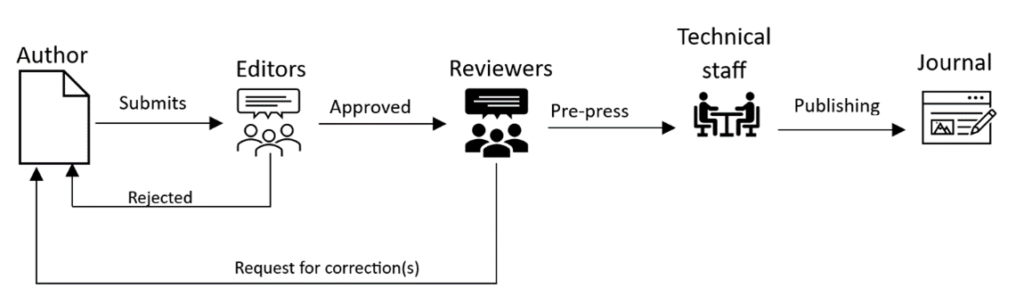
JITA critically evaluates all manuscripts for the compliance with novelty, importance to the specific field and convincing evidences for the conclusions drawn.
All submitted manuscripts are first reviewed by the Editorial Board for relevancy to meet editorial criteria and standards. Manuscripts retained for review are sent to two or three reviewers selected based on their research interest and qualification.
Based on the opinion of reviewers, the Editor decides to: accept the manuscript with or without minor revision, invite the authors to revise the manuscript before a final decision is reached, or reject the manuscript on lack of novelty, insufficient conceptual advance or major technical and/or interpretational problems.
Reviewers may recommend a particular course of action in their confidential comments to the editor, but should bear in mind that the Editors may have to make a decision based on conflicting advice. The most useful reviews are those setting out clear, substantiated arguments and include a recommendation of a course of action directed to the authors
JITA critically evaluates all manuscripts for the compliance with novelty, importance to the specific field and convincing evidences for the conclusions drawn.
All submitted manuscripts are first reviewed by the Editorial Board for relevancy to meet editorial criteria and standards. Manuscripts retained for review are sent to two or three reviewers selected based on their research interest and qualification.
Based on the opinion of reviewers, the Editor decides to: accept the manuscript with or without minor revision, invite the authors to revise the manuscript before a final decision is reached, or reject the manuscript on lack of novelty, insufficient conceptual advance or major technical and/or interpretational problems.
Reviewers may recommend a particular course of action in their confidential comments to the editor, but should bear in mind that the Editors may have to make a decision based on conflicting advice. The most useful reviews are those setting out clear, substantiated arguments and include a recommendation of a course of action directed to the authors
jita@apeiron-edu.eu
+387 51 247 925
+387 51 247 975
+387 51 247 912
Pan European University APEIRON Banja Luka Journal JITA Pere Krece 13, P.O.Box 51 78102 Banja Luka, Republic of Srpska Bosnia and Hercegovina
© 2024 Paneuropean University Apeiron All Rights Reserved
jita@apeiron-edu.eu
+387 51 247 925
+387 51 247 975
+387 51 247 912
Pan European University APEIRON Banja Luka Journal JITA Pere Krece 13, P.O.Box 51 78102 Banja Luka, Republic of Srpska Bosnia and Hercegovina
© 2024 Paneuropean University Apeiron All Rights Reserved
Pan European University APEIRON Banja Luka Journal JITA Pere Krece 13, P.O.Box 51 78102 Banja Luka, Republic of Srpska Bosnia and Hercegovina
jita@apeiron-edu.eu
+387 51 247 925
+387 51 247 975
+387 51 247 912
© 2024 Paneuropean University Apeiron All Rights Reserved